X Analytics: The Metrics That Actually Grow Your Account
Impressions feel good, but they rarely tell you what to do next. Here are the X metrics that actually predict growth, what good looks like, and a simple weekly review you can do in fifteen minutes.
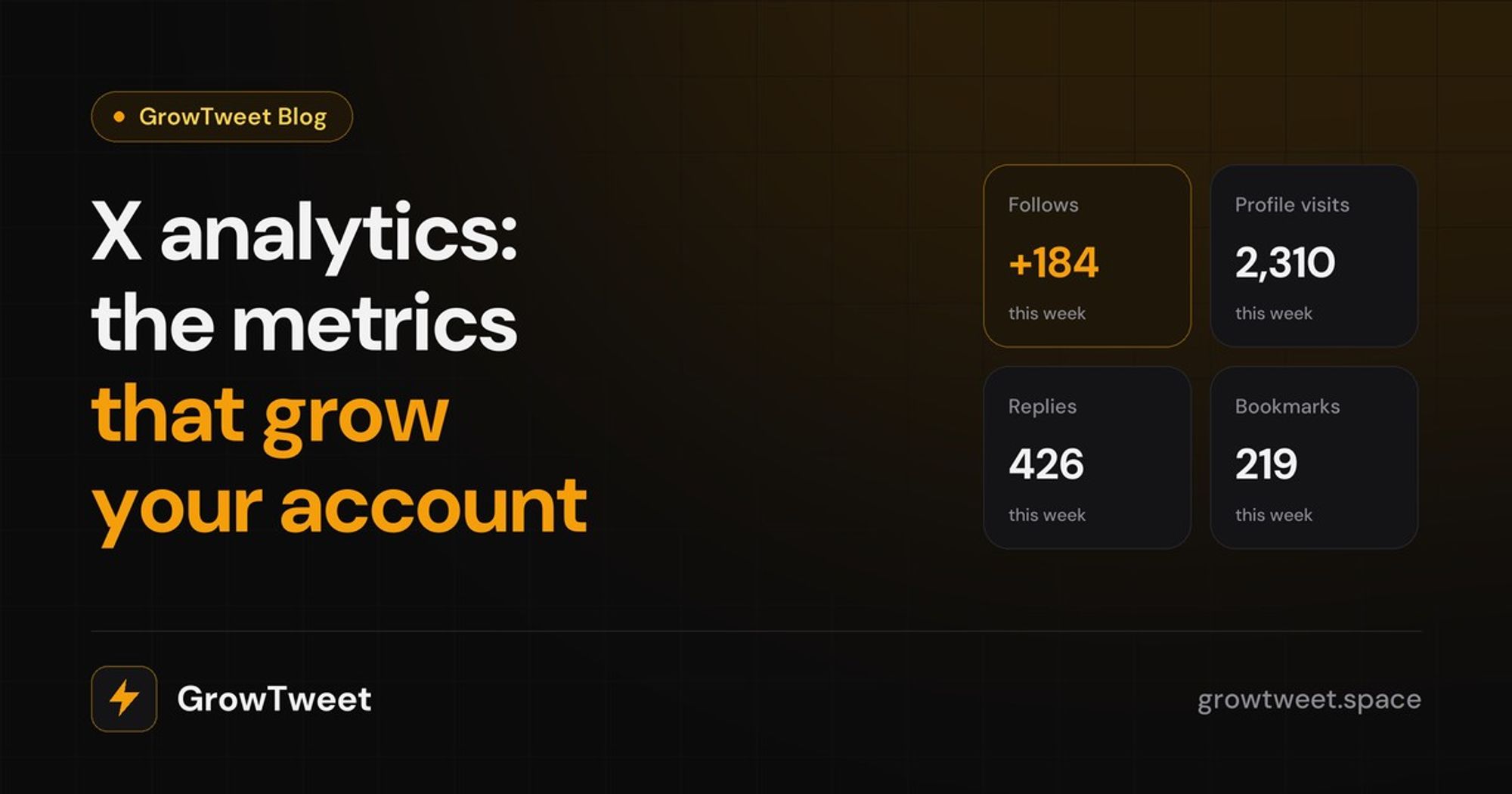
Open X analytics and you get a wall of numbers: impressions, engagements, engagement rate, profile visits, link clicks, bookmarks. It is easy to stare at them, feel good or bad, and change nothing. That is a waste of good data.
The point of analytics is to answer one question: what should I do more of next week? This guide explains which metrics answer that question, which ones mostly do not, and how to turn them into a short weekly routine.
Where to find your numbers
X shows analytics in a few places:
- On each post. Tap the small bar chart icon under any of your posts to see its impressions, engagements and more.
- Account analytics. On the web, the Analytics section gives you an overview across all your posts for a chosen period. At the time of writing, full account analytics are part of X Premium.
- Third-party tools. Tools like GrowTweet read your post data and summarize it for you, so you do not have to dig through every post.
Whichever you use, the metrics below are the ones to focus on.
The metrics, from most to least useful
1. New follows per post
This is the metric closest to your actual goal. A post with 50,000 impressions and zero follows did nothing for your account's growth. A post with 3,000 impressions and 40 follows is gold: it attracted exactly the people you want.
When you find posts that bring follows, study them. They usually share something: a specific topic, a format, or a point of view that tells people what they will get by following you.
2. Profile visits
A profile visit means someone liked a post enough to ask "who is this?". It is the step right before a follow. If a post gets many profile visits but few follows, the post is working and your profile is not. Fix your bio, photo and pinned post. Our growth playbook covers how to turn your profile into a landing page.
3. Replies
Replies are the strongest engagement signal on X. They show that people cared enough to respond, and they start conversations that keep a post alive in the feed. Posts that get many replies usually contain an opinion, a question or a relatable story.
4. Bookmarks
A bookmark means "this is useful, I want it later". Bookmarks are a good sign that your practical content, how-tos, lists and templates, is hitting the mark. If your bookmarks are high, you are building trust.
5. Engagement rate
Engagement rate is engagements divided by impressions. It is useful for comparing posts with each other: a post that reached fewer people but had a much higher rate was more interesting to the people who saw it. Try a similar post again at a better time.
There is no universal "good" engagement rate. It varies by niche, account size and format. Compare yourself to your own average, not to a number from someone else's account.
6. Impressions
Impressions show reach, how many times your post appeared on screens. They matter, but they are an input, not a result. High impressions with low engagement usually means the first line pulled people in and the rest let them down.
7. Link clicks
If you share links to a product, newsletter or article, link clicks show whether your audience wants to go further. Keep in mind that posts with links often reach fewer people, so many accounts put the link in a reply instead of the main post.
Metrics that mislead
A few numbers are easy to overvalue:
- Total follower count, daily. It moves slowly and is affected by things you cannot control, like spam cleanups. Track it weekly or monthly.
- One viral post. A single post that blew up is exciting, but it rarely tells you much. Patterns across ten posts are worth more than one outlier.
- Likes alone. Likes are cheap and quick. They show approval, not interest. Replies, bookmarks and follows tell you more.
A fifteen-minute weekly review
Once a week, block fifteen minutes and do this:
- List your top five posts by follows or profile visits. Not by impressions.
- Write one line on why each worked. Topic, format, first line, timing. Be specific.
- Look at your bottom five. Was it the topic, the format, or the timing?
- Check your timing. Did posts published at certain hours do better? Our guide on the best time to post on X explains how to find your own windows.
- Pick one change for next week. More of a winning format, a new angle on a winning topic, or a different posting time.
Write your notes down. After a month, you will have a clear picture of what your audience wants from you, which is worth more than any generic advice.
Turn numbers into action
Data is only useful if it changes what you do. Keep a simple rule: every review ends with one decision. Over a few months, those small decisions compound into steady growth.
If you would rather not dig through numbers yourself, GrowTweet gives you a daily review of what worked and what to do next, and feeds those lessons into the drafts it writes for you. You stay in control of every post; the analysis just happens in the background.