The Best Time to Post on X (and How to Find Yours)
Generic "best times" charts are a starting point, not an answer. Here is how to find the hours when your own audience is online, and how to post at them every day.
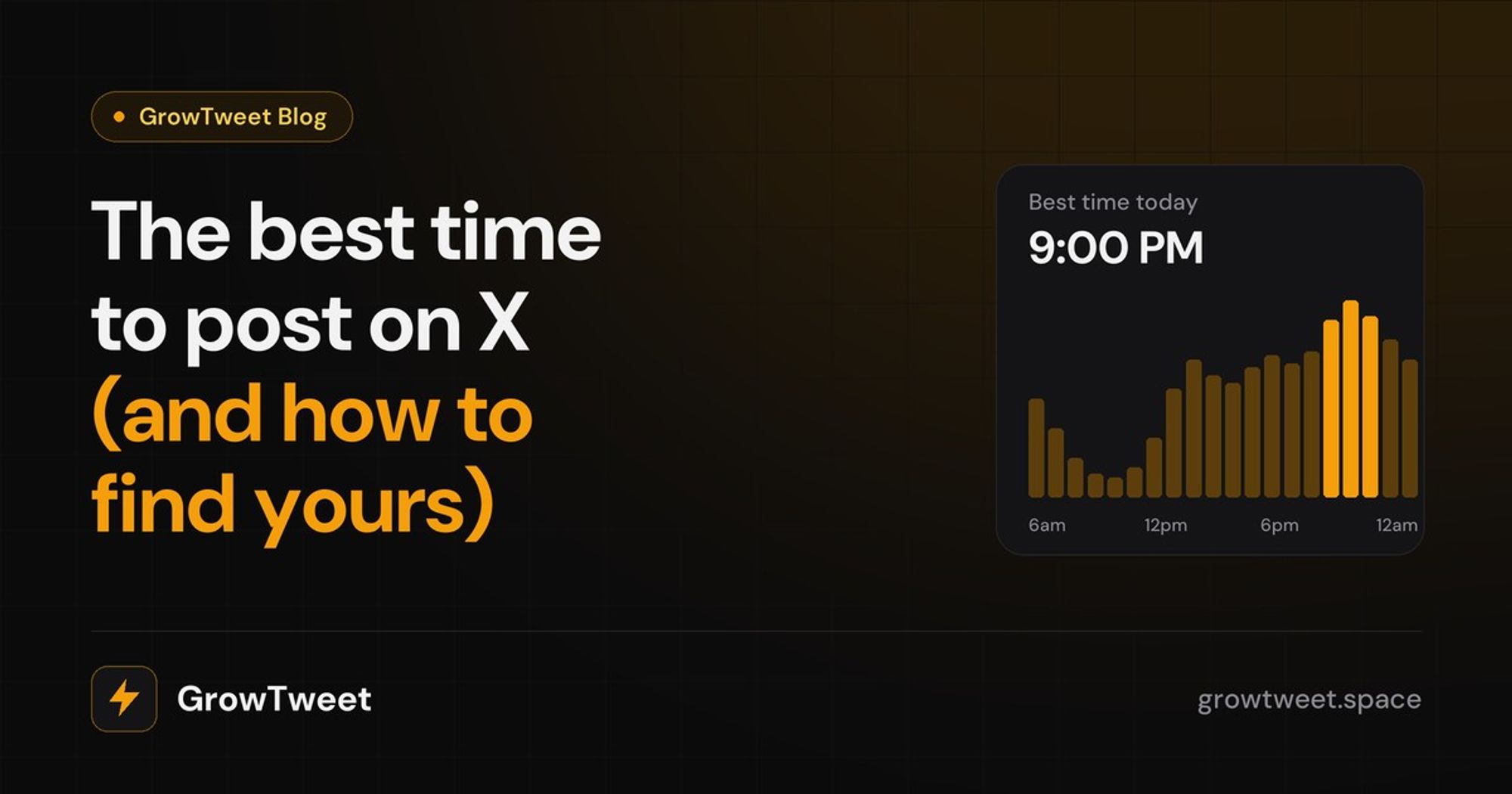
Search for "best time to post on X" and you will find dozens of charts, each with a slightly different answer. Weekday mornings. Lunchtime. Wednesday at 9am. The truth is simpler and more useful: the best time to post is when your audience is online, and that is different for every account.
This guide explains why timing matters so much on X, why generic charts often mislead, and how to find and use your own best times.
Why timing matters on X
X moves fast. A post usually gets most of its views in the first hour or two after it goes out. During that window, early likes, replies and reposts tell X that the post is worth showing to more people. After that, it slides down timelines and the reach mostly stops.
So the same post can do very differently depending on when you publish it:
- Posted while your audience is scrolling: it gets early engagement, which earns it more reach, which earns more engagement.
- Posted while your audience is asleep or busy: it gets a few quiet views, the early signal is weak, and it never takes off.
Timing will not save a weak post. But it can decide whether a good post gets the audience it deserves.
Why generic "best time" charts mislead
Most published charts average millions of accounts together. That average hides the things that actually matter for you:
- Where your followers live. If most of your audience is in India, a chart built around New York mornings is close to useless.
- Who your followers are. Developers, founders, students and parents all scroll at different times of day.
- Weekdays versus weekends. Some niches are busiest on Monday mornings; others come alive on Sunday evenings.
Treat general advice as a first guess. Weekday mornings and early evenings in your audience's time zone are a sensible place to start. Then let your own data replace the guess as fast as possible.
How to find your own best time to post
Step 1: Find out where your audience is
Look at the followers who engage with you most. Check their profiles and locations. You will usually spot one or two main time zones. Those are the clocks you should post by, not your own.
Step 2: Run a simple two-week test
For two weeks, post at a few different times each day, for example morning, midday and evening in your audience's main time zone. Keep the type of post similar so you are comparing times, not topics.
Step 3: Compare engagement, not just views
For each post, note the time, the views, and the replies and reposts in the first two hours. Engagement rate (engagement divided by views) is more useful than raw views, because it shows when the people who see your posts actually care.
Step 4: Pick your windows and stick to them
After two weeks, you will usually see two or three clear windows where posts do better. Post your most important content in those windows, and keep testing one new time slot now and then. Audiences change as you grow, so check again every month or two.
Make good timing automatic
Finding your best times is half the job. The other half is posting at them every day, including when you are asleep, in meetings, or on holiday. That is where scheduling helps:
- Write in batches, schedule ahead. Write a week of posts in one sitting and queue them for your best windows.
- Space posts out. Leave a few hours between posts so they do not compete with each other.
- Keep the same slots each day. Your audience learns when to expect you, and your data stays easy to compare.
GrowTweet does this for you. It learns when your audience is active, shows your best times for each day of the week, and fills your schedule with those slots. Only posts you have scheduled or approved go out, within the daily limit you set.
Common timing mistakes
- Posting by your own clock. If your audience is eight hours away, your "morning post" lands at their midnight.
- Posting everything at once. Three posts in ten minutes split your own audience's attention.
- Never re-testing. The times that worked at 500 followers may not be the best at 20,000.
- Ignoring replies after posting. The first hour is when replying to comments helps most. Plan to be around, or at least check in.
The short version
The best time to post on X is when your audience is online. Find out where they live, test a few time slots for two weeks, compare engagement, and post your best work in the winning windows every day. Then let scheduling handle the clock.
Timing is one part of growing on X. For the full plan, read our guide on how to grow on X in 2026. If you want your best times found and filled for you, try GrowTweet free.